

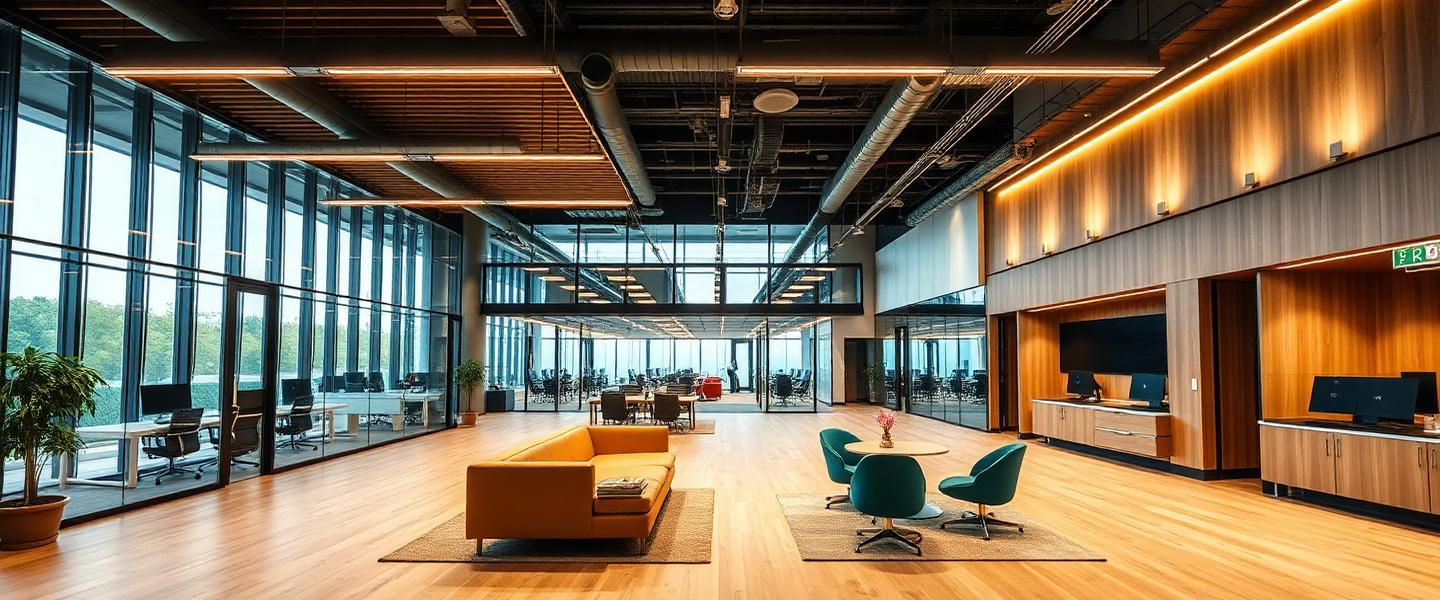
Large office interior projects involve multiple trades, tight timelines, and significant budgets. Cost optimisation is not about reducing quality—it is about planning, coordination, and informed material decisions that prevent wastage and variations.
The strategies below represent proven approaches from projects ranging from 5,000 to 50,000 square metres. Each has been tested across multiple sectors—financial services, technology, professional services, and government—and delivers measurable results when applied with discipline and early engagement.
Strategy 01
Early Cost Planning & Benchmarking
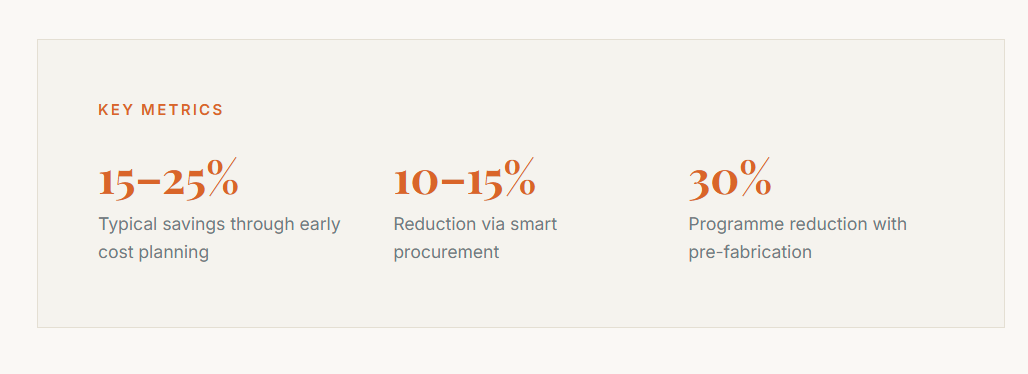
Establish realistic budgets during the design phase using historical data and benchmarking against similar projects. Early cost plans reduce the risk of late-stage redesigns and budget overruns.
Strategy 02
Standardised Material Specifications
Standardising finishes and materials across floors and zones reduces procurement complexity and enables bulk purchasing discounts without visible compromise to design intent.
Strategy 03
Value Engineering Without Value Loss
Systematic review of design elements to achieve the same functional and aesthetic outcomes at lower cost. Focus on high-impact areas and accept simplification in secondary zones.
Strategy 04
Programme Optimisation
Time is cost in fit-out projects. Compressing the programme through better sequencing, pre-fabrication, and parallel work streams reduces prelims and accelerates handover.
Strategy 05
Procurement Strategy
The right procurement route can save 10–15% on a large fit-out. Consider negotiated contracts, two-stage tendering, or construction management depending on project complexity.
The Bottom Line
Cost optimisation in large fit-outs is a discipline, not a compromise. Projects that embed cost thinking from day one consistently deliver better outcomes—on budget, on time, and without sacrificing the design intent that attracts and retains talent.
The five strategies outlined here are not theoretical. They are the result of decades of project delivery across some of the most demanding commercial environments. Applied together, they form a framework for intelligent cost management that protects both the bottom line and the quality of the built environment.
